
Your needs, this model
Does it fit your priorities?
Does it fit a small kitchen used mainly for drinks and small portions?
Its compact body and 900-watt output make it worth comparing, if your actual mug and bowl fit. Include the manual’s ventilation space and door access rather than choosing it from case dimensions alone.
Explore this need in the finder →Can I turn off beeps without buying a large microwave?
Yes. The exact manual documents a Sound button that displays MUTE when beeping is off. Fan, turntable and door sounds remain separate from those alerts.
Explore this need in the finder →Does its Reheat button satisfy a sensor-reheat requirement?
No. The exact controls use portion-based convenience presets rather than a verified humidity-sensor system. Choose a documented sensor model when that assistance is essential.
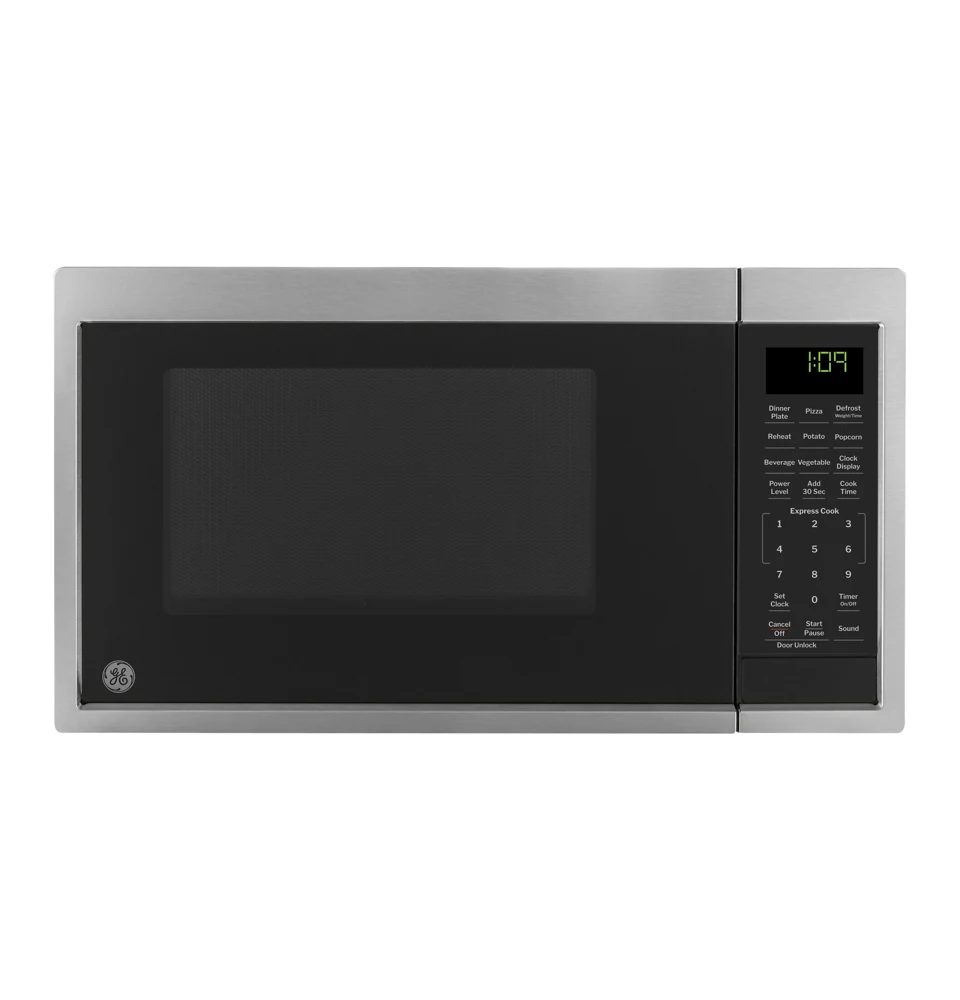
Explore this need in the finder →The GE GCST09N1WSS is a compact 900-watt microwave for someone who values a smaller body, familiar timed controls and the ability to mute beeps. The important limit is cookware: its 10.5-inch tray is a better guide than the 0.9-cubic-foot capacity when you are checking a plate. It does not provide documented humidity-sensor reheating, so it fits a learned daily routine better than a sensor-essential shopping list.
A compact body with a practical middle ground
A tiny microwave can save space but still be frustrating if every meal needs transferring to another dish. The GCST09N1WSS is worth comparing when you want more cooking output than a basic 700-watt compact while keeping the appliance smaller than a large family microwave. GE's exact product specifications give a 19-inch width, 14.5-inch depth and 11.5-inch height, with a 900-watt output rating.
Those figures are a starting point, not an approval for any similarly sized shelf. Sketch the location on the counter and consider what you still need to do beside it. A microwave that leaves a clear preparation area can be more useful than extra cavity space used only occasionally. If the small body would force daily changes to the dishes you use, a larger model may still be the more convenient purchase.
Measure the plate, bowl and container separately
The documented glass tray is 10.5 inches across. That should prompt a measurement of the widest rim on your dinner plate, rather than an assumption about “standard” plates. A handled bowl adds another dimension, and a rectangular meal-prep box needs room to turn through its diagonal path. Check the lid and the opening as well as the base.
Think about removing a hot item. A container can technically fit while leaving too little room for your fingers or an oven mitt. For a person mainly warming drinks, that may never become an issue; for someone lifting a covered casserole, it can decide the purchase. The useful question is which pieces of your actual cookware work comfortably, not whether a product description calls the cavity compact or roomy.
Convenience buttons are not a humidity sensor
The GCST09N1 manual describes time entry and food controls using selected portions. The exact product specification groups them as convenience controls. We therefore treat the Reheat and Dinner Plate buttons as presets rather than verified humidity-sensor reheating.
That can be entirely suitable for a familiar snack or bowl of leftovers. You choose an appropriate starting setting, check the result and learn the routine that works for your usual serving. If you want the oven to estimate an initial cycle for changing dinner portions, choose a model with a documented sensor instead. The distinction changes the recommendation even when two control panels carry similarly named buttons.
Muted tones and the newer door operation
The linked manual documents a Sound button that turns beeping off, with MUTE appearing on the display. It also describes a child-resistant door that requires an unlock action before opening after cooking begins. This is separate from the control-panel lock. A household replacing an older microwave should understand that the normal opening sequence can be different.
For an early riser, switchable tones are a useful convenience, but they do not silence the fan, turntable or door. For someone with limited hand strength or dexterity, try the actual door and controls before buying if possible. The manual explains a manufacturer-provided way to change the child-resistant-door setting; use the instructions supplied with the unit rather than a procedure borrowed from another model.
The required operating space is larger than the case
The manual recommends three inches at each side and above, one inch behind, and a front-door position at least three inches back from the counter edge. Include the door's movement, electrical access and a landing place for hot food. A wall or another appliance can obstruct the working arrangement even when the metal body fits neatly.
No approved trim-kit route has been established for GCST09N1WSS in this assessment. Do not enclose it simply because a cabinet opening is large enough. A compact countertop model solves a different installation problem from an oven sold with a documented built-in system.
How it fits your questionnaire choices
“I mainly heat drinks and smaller portions, and counter space matters.” This is the strongest reason to shortlist it, provided your mug and bowl fit and you can preserve the recommended ventilation space.
“I want beeps off but do not need a sensor.” The documented mute setting makes it a useful candidate. Keep your expectations about running noise separate from the alert preference.
“A wide plate or automatic sensor reheating is essential.” Check a different model. Do not assume a familiar Reheat label provides a sensor, or that the cavity-volume number guarantees your plate's rotation.
Our judgment
The GE owner center identifies this model as an August 2024 generation with an ongoing manufacture record at our check. That helps distinguish it from older similar GE codes, but it is not a stock promise. Confirm the seller's full model, condition and supplied tray. Choose it when its compact shape and quiet-alert option make everyday reheating easier; choose more dish space or sensor assistance when those are your actual priorities.
Key details at a glance
| Nominal cavity | 0.9 cu. ft. |
|---|---|
| Cooking output | 900 W |
| Turntable diameter | 10.5 in |
| Sensor reheating | Not supported in reviewed instructions |
| Alert mute setting | Documented |
| Body W × D × H | 19 × 14.5 × 11.5 in; ventilation additional |
Facts apply to the reviewed model and document edition. Read the relevant section for generation differences and installation conditions.
Sources for this assessment
Compare it with your other choices
Use your needs to find alternatives and understand the tradeoffs.