
Your needs, this model
Does it fit your priorities?
Does it suit a white kitchen and sensor-assisted dinner reheating?
Yes, if your cookware and countertop setup fit. The exact white model has documented steam-sensing Reheat for suitable single servings, with timed cooking used for other foods or amounts.
Explore this need in the finder →Will a larger 1.4-cu.-ft. cavity necessarily fit a wider plate?
No. GE lists a 12.625-inch tray here; nominal cavity volume and plate clearance are different measurements. Check your actual rim, handles, cover and full rotation.
Explore this need in the finder →Does the door release need access to the right side?
The linked manual describes a side lock button used with the front door release. Check comfortable access at the intended location, and try the actual unit if dexterity or reach matters.
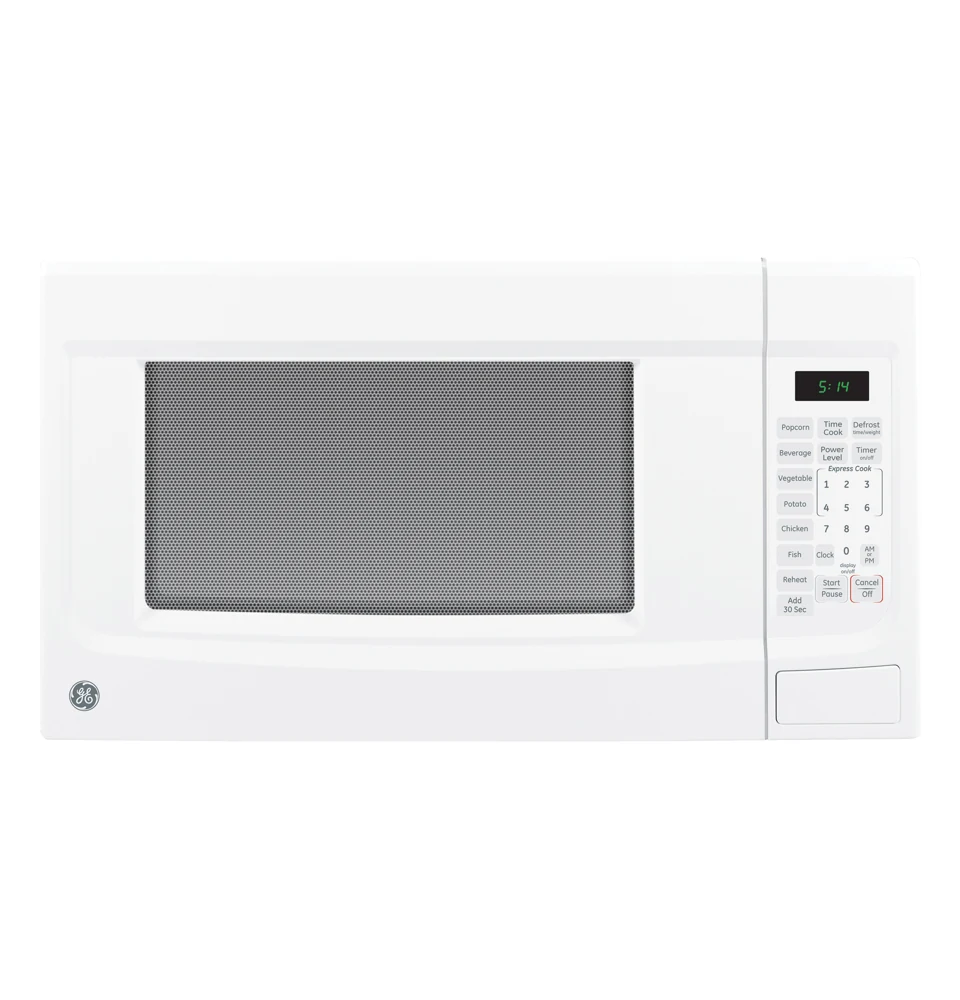
Explore this need in the finder →The GE GCST14S1WWW is a white 1.4-cubic-foot sensor microwave for ordinary dinner reheating when you want moisture-based assistance and a traditional keypad. Its useful distinction is confirmed sensor operation in a white appliance. Check cookware and access carefully: a 12.625-inch recessed tray does not make every family dish fit, and the documented child-resistant door uses a side control as well as the front release.
White finish and sensor assistance address different needs
Some kitchens need a white appliance to coordinate with what is already there; others primarily need help choosing an initial reheating cycle. This model addresses both preferences. GE's exact product record identifies a white exterior, 1,100-watt cooking output and a 1.4-cubic-foot cavity. The full WWW suffix matters when comparing a listing or replacement.
Choose the finish after deciding the practical requirements. A white microwave that crowds the counter or cannot accommodate your meal container is not a good match merely because it coordinates with a refrigerator. Conversely, there is no need to change the kitchen's appearance for a feature you can obtain in the finish you want. Compare each requirement explicitly rather than using color as a shorthand for quality.
What sensor reheat does for leftovers
The GCST14S1 manual describes a Reheat cycle that detects steam and then begins a remaining-time countdown. That is substantive sensor evidence, rather than a Reheat label applied to a fixed portion preset. It is relevant if your leftovers change and you dislike selecting a starting time from scratch.
Sensor assistance still has a scope. The manual distinguishes recommended single-serving foods from other tasks and directs the user toward timed cooking for unsuitable foods or larger amounts. That is useful buying context: a sensor does not make one automatic button the right choice for every dinner. If a meal contains ingredients that respond differently, checking and adjusting the result remains part of using the appliance well.
The tray is more informative than a capacity ladder
GE specifies a recessed 12.625-inch turntable and an exterior 21⅞ inches wide, 16⅜ deep and 12½ high. A buyer moving from a smaller nominal cavity should not assume that the new model takes a proportionately wider plate. Cavity volume, tray diameter, opening and usable height describe different aspects of fit.
Measure the rim of your everyday plate, the handles on a casserole and the height of a covered bowl. A rectangular container needs clearance through its full rotating path. Also leave room for a safe grip when lifting hot food out. More nominal volume is useful only when its shape helps the dishes you actually own; it is not a universal upgrade for every piece of cookware.
The door release affects placement and accessibility
The linked manual describes a child-resistant door arrangement with a button on the right side used together with the front release. This is different from entering a code to lock the keypad and different from an older one-step pushbutton. Keep access to the actual controls in mind when planning the location.
If a wall or another appliance sits closely on the right, examine whether the normal door operation remains comfortable. Someone with limited reach or dexterity should try the actual sequence while the unit is off if possible. The manufacturer describes a supported configuration change for households that need it; consult the instructions supplied with your unit rather than borrowing a sequence from the smaller GCST models.
Power and countertop space
The 1,100-watt number is cooking output. Electrical-input fields on the product record are separate and do not increase that rating. Use the exact appliance label and installation instructions for supply planning, and compare the cooking rating with the guidance on food packaging.
This is a countertop model. Page 3 of the exact manual recommends 3 inches at each side and above, and 1 inch behind. Adding those gaps to the published body gives 27⅞ inches wide, 17⅜ deep and 15½ high. That is the body plus ventilation space, rather than a complete installation footprint: the door front must also sit at least 3 inches back from the counter edge. Include the open door, right-side control access, outlet and a landing space for hot food. These figures do not approve a tight enclosure. No exact compatible trim-kit route has been established for this model in the evidence reviewed here.
Which answers make it a good match?
“I want a white microwave and sensor assistance for regular dinner portions.” This is the most convincing reason to shortlist it. Its documented sensing method and exact finish address both needs, after your dish and placement checks.
“I am choosing a bigger capacity because my wide plate does not fit.” Check the actual tray and cavity rather than relying on the capacity number. A wide plate may need a different model even if another oven has a lower cubic-foot label.
“Turning off the beeps is essential.” A mute setting has not been established for GCST14S1WWW. Choose a model with exact evidence for that feature instead of assuming every GE sensor microwave includes it.
“I want baking or browning as well.” This is a microwave-only cooking choice. Sensor technology helps manage microwave cooking; it does not add a convection heater.
Our assessment
The owner center records a September 2024 generation with an ongoing manufacture record at our check. Confirm the full code and actual offer rather than inferring stock. GCST14S1WWW makes sense when white finish, sensor-assisted reheating and the physical layout all fit your routine. Its limitations are the real dish and access checks that a capacity category alone cannot answer.
Key details at a glance
| Nominal cavity | 1.4 cu. ft. |
|---|---|
| Cooking output | 1100 W |
| Turntable diameter | 12.625 in |
| Sensor reheating | Documented |
| Body W × D × H | 21.875 × 16.375 × 12.5 in; ventilation additional |
Facts apply to the reviewed model and document edition. Read the relevant section for generation differences and installation conditions.
Sources for this assessment
Compare it with your other choices
Use your needs to find alternatives and understand the tradeoffs.