
Your needs, this model
Does it fit your priorities?
Can one appliance handle reheating and small oven dishes?
The documented convection and microwave modes make that a real use case. Check the pan, rack arrangement and mode-appropriate cookware before deciding it can replace your existing routine.
Explore this need in the finder →Does it meet a requirement for mute and sensor assistance?
The exact PEB9159SJSS sheet lists both sensor functions and mute. That addresses those conveniences without proving silent running or measured heating uniformity.
Explore this need in the finder →Can I reuse the frame from an old built-in microwave?
Only if the exact oven-and-kit instructions confirm compatibility. Match the opening, supports, airflow and kit to PEB9159SJSS; similar nominal width or finish is not enough.
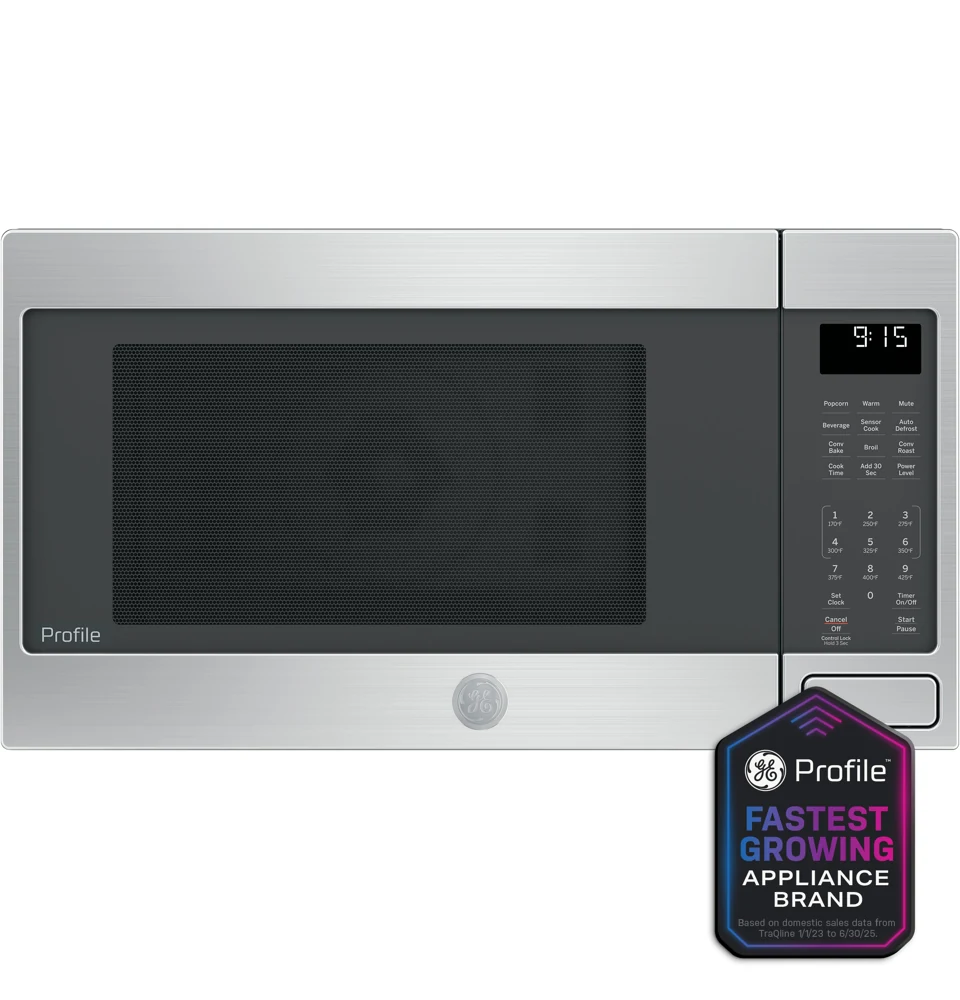
Explore this need in the finder →The GE Profile PEB9159SJSS is an earlier convection-microwave combination for a buyer who wants reheating and small oven dishes from the same appliance. It is a more relevant option for occasional baking and browning than for saving the most countertop space. Its documented sensor functions, mute setting and optional built-in route are useful, but the exact model and installation accessories matter when comparing an older offer.
Choose it for the oven job you actually need
A combination microwave makes sense when a second cooking method removes a repeated inconvenience. Someone who wants to bake a small dish without allocating a second appliance position has a different requirement from someone who only reheats coffee. The exact GE Profile specification sheet documents microwave and convection cooking, sensor controls, warming, a recessed 13.5-inch glass tray and two removable racks.
Start with a specific food. What pan does it use? Will you want that cooking method several times a week, or just once in a while? What would happen to your existing oven routine? Those questions help decide whether the combination earns its space. Extra modes are less useful when they duplicate an appliance you already use comfortably or require more setup than the small task deserves.
Fifteen hundred input watts is not the microwave rating
The documented microwave output is 1,000 watts, in a nominal 1.5-cubic-foot cavity. Do not confuse a separate electrical input figure or an oven-heater rating with microwave cooking output when reading meal directions. Compare the cooking rating with the package guidance, and compare the appliance's actual electrical requirements with the planned outlet and circuit.
Our judgment is that this is a versatility purchase rather than a race for the highest microwave number. If the meal routine is entirely reheating, a microwave-only alternative may be more straightforward. If the routine really includes oven cooking, the combination can be useful even when another model advertises higher microwave output. The right comparison follows the task, not a single headline wattage.
The cavity must fit cookware and the way you handle it
The sheet lists a body approximately 21¾ inches wide, 20 deep and 13 high. A 13.5-inch tray is a useful dish reference, but it is not a guaranteed maximum pan size. Check handles, lids, the doorway and the full rotating path. Racks change the vertical space available, so measure the intended arrangement rather than considering the empty cavity alone.
There is also a mode question. A container appropriate for microwave reheating may not tolerate a hot convection cavity; an oven pan is not automatically appropriate when microwave energy is part of a program. Follow the cookware and rack instructions for the exact cooking mode. The convenience of one appliance should not mean treating all your existing containers as interchangeable.
Sensor assistance and quieter alerts
The model-specific sheet lists sensor programs and on/off sound control, including mute. Sensor assistance can help with the initial choice for changing meal portions, while timed operation remains useful for a familiar serving. It does not prove that the appliance has been measured to heat every mixed plate evenly, and it does not make a sensor cycle suitable for every amount or food.
The mute setting is useful for a kitchen close to sleeping or working space. Keep its meaning precise: disabling alerts does not silence the fan, door or moving cookware. A cooking mode that heats the cavity can also leave hot parts after the cycle. Plan a safe place to set down dishes and allow the appliance to finish its normal cooling behavior rather than judging it solely by whether it beeps.
Countertop use and an approved built-in system
GE describes this microwave as countertop and built-in capable with a matching trim kit. Its exact owner center links the PEB9159 family manual. The linked instructions recommend three inches at the sides and above and one inch behind for countertop placement, with a front-edge setback; built-in placement follows the approved kit instructions instead.
Do not buy an oven from its cavity capacity and then search for any frame that looks close. Confirm the exact kit, opening, supports and permitted surrounding appliances before ordering an installed replacement. A current family manual may cover more than one control layout, so use the actual unit's model and supplied documentation for operational details. Features from another PEB9159 suffix or the separate Café family should not be silently added to SJSS.
How your questionnaire answers affect this choice
“I want microwaving plus baking or browning.” This is the right use to explore. Check the pan, mode-specific cookware and operating space before deciding that one combination appliance will replace two existing routines.
“I want a verified mute setting and sensor assistance.” Both are supported by the exact-model specification. They are conveniences to compare, not a guarantee of low measured running noise or perfect results.
“The smallest possible microwave body is my priority.” This is unlikely to be the natural first choice. The combination design makes most sense when its extra cooking method is valuable enough to justify the space.
“I am comparing an earlier listing or an installed replacement.” The owner center records manufacture from June 2016 through December 2024. Confirm the offer's exact code, condition, tray, racks and installation accessories, as well as the seller's return terms. A historical support page does not establish available stock.
Our assessment
Shortlist the PEB9159SJSS for a real two-method cooking need or a carefully documented replacement. Keep looking if the extra modes would rarely be used or if its operating area crowds the only preparation counter. Its strongest case is a specific fit between meals, cookware and placement: one appliance should take over a useful cooking job while leaving the kitchen comfortable to use.
Key details at a glance
| Nominal cavity | 1.5 cu. ft. |
|---|---|
| Cooking output | 1000 W |
| Turntable diameter | 13.5 in |
| Sensor reheating | Documented |
| Alert mute setting | Documented |
| Approved trim-kit route | Documented |
| Body W × D × H | 21.75 × 20 × 13 in; ventilation additional |
Facts apply to the reviewed model and document edition. Read the relevant section for generation differences and installation conditions.
Sources for this assessment
- https://assets.ajmadison.com/ajmadison/itemdocs/PEB9159SJSS_Specs.pdf
- https://products.geappliances.com/appliance/gea-specs/PEB9159SJSS/featureguide
- https://images.salsify.com/image/upload/s--oFVlD5Ig--/kaqejaea8aqrwfazoptd.pdf
- https://www.geappliances.com/content/pro/downloads/2019-GE-Profile-Catalog-1-G0109.pdf
Compare it with your other choices
Use your needs to find alternatives and understand the tradeoffs.