
Your needs, this model
Does it fit your priorities?
Is it worth comparing when body depth is the problem?
Its 15 13/16-inch body is shallower than the SN76LS. Ventilation and door access still need a separate check.
Explore this need in the finder →Can it be installed with a trim kit?
Panasonic explicitly names SN68KS for NN-TK621SS. Verify the exact oven edition, complete kit and installation sheet.
Explore this need in the finder →Can I turn off its completion beeps?
The exact-family sound instructions document BeepOff. This does not silence mechanical sounds.
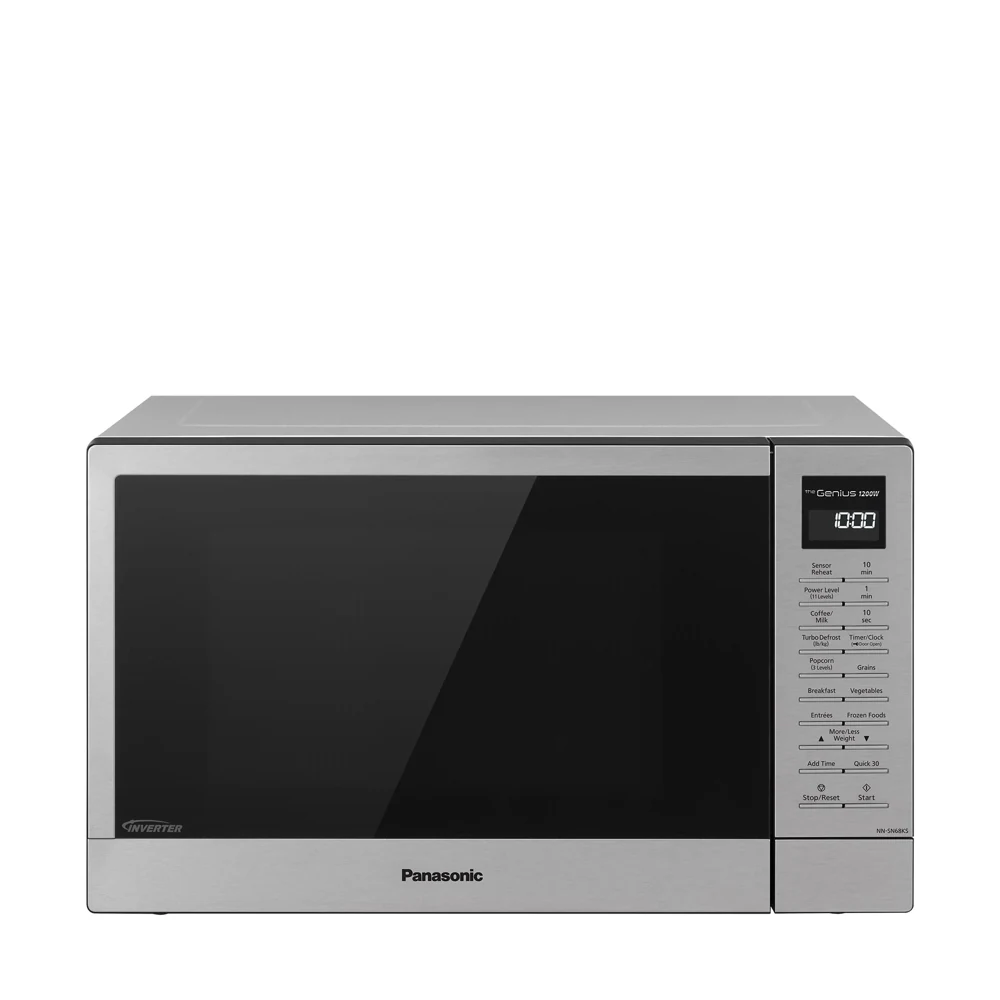
Explore this need in the finder →The Panasonic NN-SN68KS is a 1.2-cu.-ft. inverter microwave for a meal-focused kitchen that wants sensor reheating in a comparatively shallow body. It offers 1,200-W cooking output and a documented optional trim-kit route. Choose it for those concrete needs; the shared Panasonic size and appearance do not make every older or newer control edition interchangeable.
A useful size when counter depth is limited
The SN68KS body measures 20 11/16 inches wide, 12 1/4 inches high and 15 13/16 inches deep. That depth is a meaningful difference from the 19 7/16-inch body of the larger SN76LS. In a narrow kitchen, keeping the front of the appliance farther back can matter more than gaining another few tenths of nominal capacity.
Those are appliance measurements, not the required operating envelope. Ventilation gaps, the cord, door movement and the position of a hot dish must also be considered. Mark out the location and walk through taking a meal out. A body that fits on a shelf does not establish that the shelf meets the manufacturer's installation instructions.
The 1.2-cu.-ft. cavity can be a sensible choice for ordinary meals rather than serving ware. Check your usual plate, a covered bowl and any dish with handles. A taller lid or an irregular shape can create a different constraint from a round plate. The nominal capacity alone cannot establish whether a container will pass through the opening and rotate.
Sensor reheating connected to the food you actually eat
Sensor Reheat is one of the model's main conveniences. It suits someone who regularly warms cooked refrigerated meals and dislikes estimating a new time for each portion. The system relies on the food's steam behavior under the prescribed conditions; it is not a camera identifying every ingredient.
The right routine depends on the task. A chilled plate, a frozen meal and a drink are different cases. Use the specified food category, portion and cover, and keep the relevant surfaces dry. Do not assume that a sensor button is the best choice for a very small snack simply because you want a shorter interaction.
There is still value in arranging food sensibly, stirring where appropriate and allowing the instructed standing time. A mixed plate can contain foods that heat at different rates. Automatic timing reduces one decision; it does not remove the need to check the result. There is no measured performance result here establishing uniform temperature for every container and portion.
Inverter power without a family-size cabinet
The cooking-output rating is 1,200 W. A higher output than your previous microwave can mean shorter familiar timings, but do not adjust every food by a single wattage ratio. Follow relevant package guidance and learn a sensible starting setting for the portions you eat regularly.
Inverter control is a reason to examine the reduced-power settings, especially for deliberate reheating and thawing. Maximum output is not the appropriate answer to every food. A delicate sauce and a dense refrigerated dish may call for different settings, and a defrost cycle can still require rearrangement and standing time.
The reviewed panel uses dedicated time buttons alongside automatic functions rather than a 0–9number pad. That is a different interaction from typing a familiar time directly. Check the actual time-entry arrangement before choosing it for a user with a strong control preference; a similar Panasonic name is not evidence of the same interface.
The optional trim kit is a specific installation system
Panasonic's NN-TK621SS product page explicitly names NN-SN68KS among its compatible models. This establishes a documented cabinet route beyond ordinary countertop use. The kit is separate from the microwave unless the actual offer expressly includes it.
A trim kit is more than a decorative surround. Panasonic describes upper, lower and rear duct pieces as part of the system. The cabinet opening, support, ventilation and electrical access must follow the exact instructions. Do not reuse an old frame simply because it covers the front gap.
The kit's nominal27-inch size refers to its trim format. It is not the width of the oven body or a universal cabinet opening. If cabinetry is the reason for choosing this model, confirm the complete kit code, exact oven edition and installation sheet before cutting or ordering parts. For open-counter use, evaluate the countertop instructions separately.
Sound and door controls need an edition check
Panasonic's model-specific setup guidance documents a Beep Off choice for SN68KS. It can help when an electronic completion signal would disturb someone nearby. It does not silence the fan, tray or the sound of closing the door. No model-specific decibel result is claimed.
The current US product page highlights an automatic child-safety door lock, while the originally linked manual depicts earlier controls. Check the actual panel and the matching supplied instructions when a particular door-opening sequence matters. A keypad child lock and a physical door lock are different features.
This is especially relevant for someone who needs easy one-handed opening or has limited dexterity. The right decision requires looking at the actual release arrangement, not simply assuming that a safety feature will be effortless for every user. A manual for another SN-series model is not enough to settle that question.
Our recommendation
The SN68KS belongs on the shortlist for ordinary plated meals, sensor convenience, inverter control and a comparatively shallow body. The explicit kit route also makes it worth considering for a properly planned cabinet installation. Choose a larger model only when your containers require it, and choose a documented combination oven when browning or baking is essential. Verify the offered unit's edition and accessories before deciding; the benefit is how comfortably it fits your routine, not the longest feature list.
Primary sources
- Panasonic US NN-SN68KS product page
- Original exact-family owner manual
- Panasonic NN-TK621SS compatibility and installation information
- Model-specific sound guidance
Key details at a glance
| Nominal cavity | 1.2 cu. ft. |
|---|---|
| Cooking output | 1200 W |
| Sensor reheating | Documented |
| Inverter power control | Documented |
| Alert mute setting | Documented |
| Approved trim-kit route | Documented |
| Body W × D × H | 20.6875 × 15.8125 × 12.25 in; ventilation additional |
Facts apply to the reviewed model and document edition. Read the relevant section for generation differences and installation conditions.
Sources for this assessment
Compare it with your other choices
Use your needs to find alternatives and understand the tradeoffs.